![“Micronations” Review [Tribeca Festival 2026]: DIY (Dictate It Yourself)](https://adultswimcentral.com/wp-content/uploads/2026/06/Screenshot-2026-06-23-at-12.59.15-PM.png "“Micronations” Review [Tribeca Festival 2026]: DIY (Dictate It Yourself)")

If you’re of a certain age and invested in internet culture, chances are you remember the invasion of Molossia. In 2010, The Nostalgia Critic, Doug Walker’s ill-tempered film reviewer persona channeling 1980’s and 90’s media memories and regrets, celebrated the second anniversary of Doug’s website by invading the micronation of Molossia, run in Nevada by Kevin Baugh. Enlisting an army of pop culture commentators, the invasion ultimately prevailed, and the land was renamed to Kickassia. Over the course of a week, viewers watched as the Nostalgia Critic’s power started to go to his head, leading to a revolt and ultimately the transfer of power back to Baugh. The eventual controversy over this and Walker’s other large-scale online story arcs and the realization that his talents were better suited talking about bad kids’ movies is pretty well-documented by now, but the the point is this: Kickassia was probably the first time you heard the term “micronation.” Now, a new documentary by Joe Kowalski, Micronations, makes it clear that Molossia was just the tip of the iceberg. Anyone can start a micronation and many others have, and in profiling some microrulers, Kowalski reveals that they may be an alternative if not an antidote to current political anxieties and a model for a better future (and yes, if you look close enough, Kickassia is mentioned too).
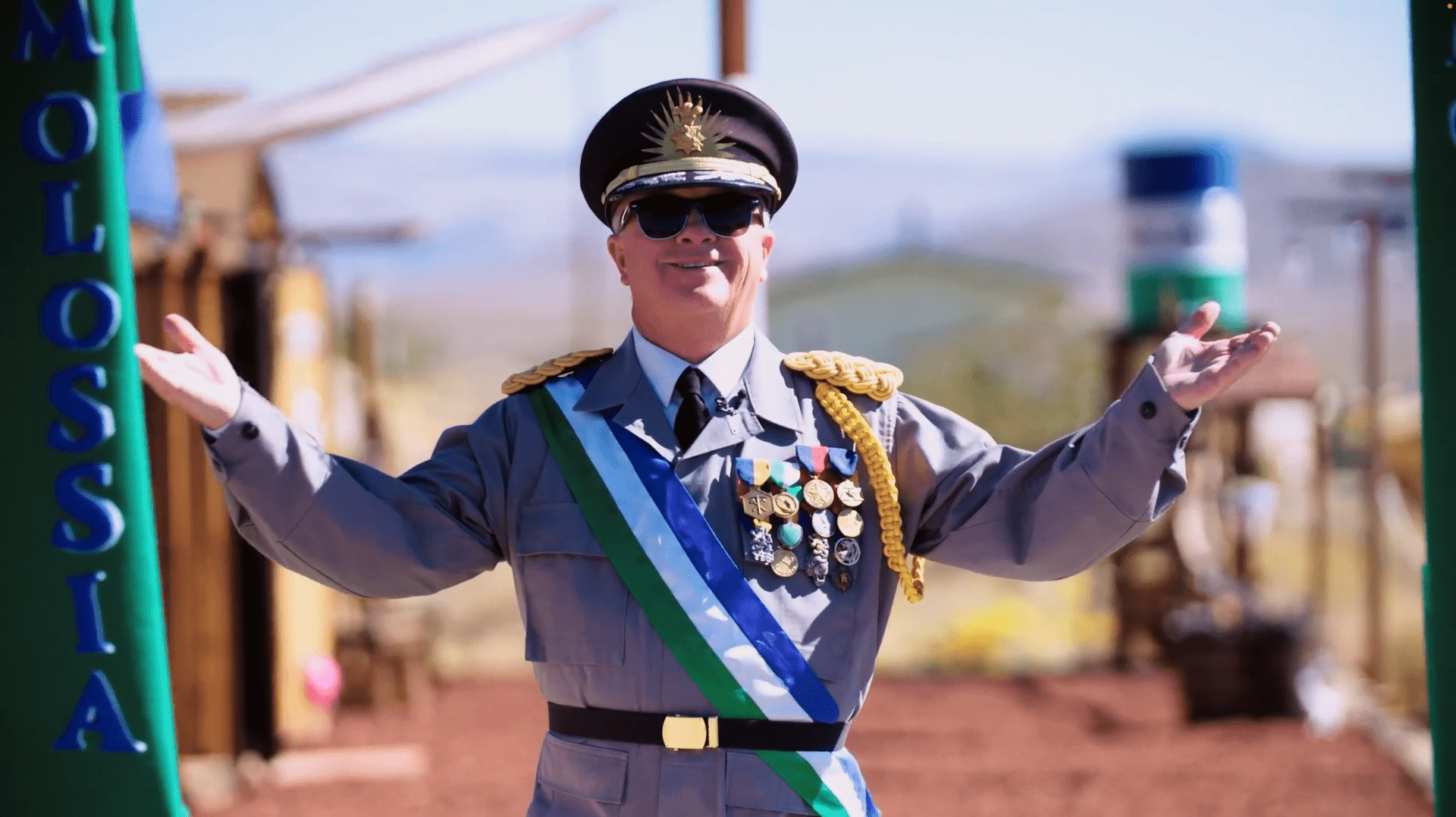
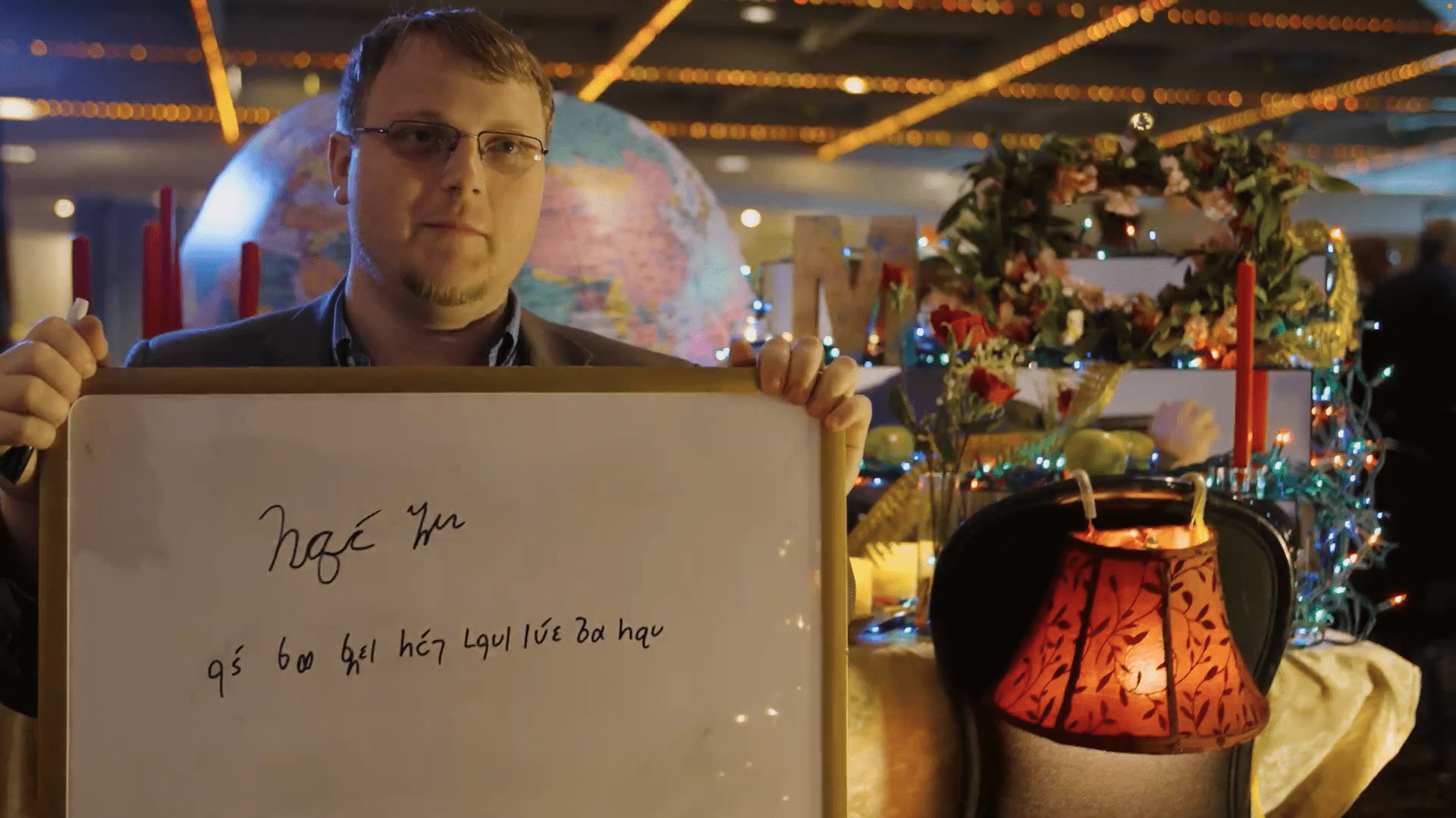
The film’s structure alternates between spotlighting a handful of chosen micronations and their histories, and MicroCon, a biennial conference of micronationalists that reveals the full extent of the micronational world (along with various competitions such as the Nemean Games, the micronational Olympics). In short, a micronation is a claimed sovereign political entity that nobody else recognizes. Without the actual structure of legitimacy, the sky’s the limit. In addition to Molossia, you have The Kingdom of Pibocip, whose prince, Philip J., basically turned the shed behind his house into a would-be miniature kingdom because nobody was using it and declared his family rulers. (He claims to have been inspired by The Princess Diaries, or at least the trailer, since he never watched the entire film.) There’s also Zaqistan, whose promotional material prominently displays a giant robot; The Ambulatory Free States of Obsidia, whose two rulers carry their claimed land, a chunk of earth they got from an ex’s house, in a briefcase; The Technocratic Republic of Aethodia, whose ruler Swena created his own national language inspired by English runes; and many, many others. Awards are given out, speeches are made, and medals are pinned. In the age of the internet, you don’t even need physical land. There are virtual micronations, existing on social media and open-world games like Minecraft, taking an already-broad concept and extending it to near-infinite proportions (though the idea is still a matter of disagreement among the micronational community).
Admittedly, many may find this hard to take seriously, especially when you have young people calling themselves Supreme Gen. Commander Grand Sgt. Major Chief Master Sgt. Supreme Leader King Iain of the Grand Republic of Moontonia (whose highest honor, the Order of the Pimp, is given out to those who show extreme devotion to the Church of Wumbo). However, those who stick with the documentary will be rewarded, as Kowalski reveals that the reasons for creating a micronation, as well as the examples shown, are significantly more broad and thought-provoking than you might expect. While there is an effort to distinguish micronations from groups like the often-extremist Sovereign Citizens’ Movement or outright secession, many micronations were started as open political statements to comment on or rebel against established governments. One spotlighted micronation, Vevchani in North Macedonia, was created after the people’s contentment with the socialist government of Yugoslavia crumbled when a state intervention threatened their natural environment, leading to peaceful protests that were met with state violence and the shattering of their faith in leadership. Another microruler started Westarctica out of an unclaimed piece of Antarctic land, and is now trying to do more for the climate than the people with actual legitimacy. The film also raises a number of pressing questions about micronations such as what happens when the founder of a micronation dies, what happens when a micronation becomes problematic (such as when an openly Nazi micronation caused a crisis within the community), and whether or not the idea of a micronation is insensitive to tribal nations and other groups who were victims of conquest and had borders forced upon them by others. That last issue also gets at the heart of what Micronations is about: because so much of the world is defined by borders, and borders are already a social construct, what is someone to do when the community they were born into no longer represents them? It becomes very obvious that for many micronationalism may not be legitimate but it is therapeutic, a way of expressing a desire for control, belonging, or to comment on how those with actual power are treating the world. A number of the participants featured are members of the LGBTQ community, and some are even children who seem to have a better knack for resolving trade agreements than actual current adult heads of state.
All that said, the concept still makes this a very fun film to watch. Kowalski uses the theme of the documentary in its aesthetic, adopting a charmingly DIY approach. There’s a diorama for each country featured, and a recurring and very fun motif is an inflatable globe bouncing and rolling around the world on its own. The highlight of the whole movie is easily the Conch Republic in the Florida Keys, which went from a protest against an overly-intrusive federal government investigation to an announcement of secession that went hilariously off the rails but nevertheless raised enough publicity to actually succeed in getting the feds to leave them alone. I watched this on a screener, and the moment that made me wish I had seen this with an audience is when Admiral Finbar describes the history of the Conch Republic and the minutes-long battle with the Coast Guard that ensued that must be heard to be believed, and is given a historical re-enactment every year. While some might see this as a 97-minute spotlight of wannabe rulers role-playing, the political conversations that Micronations brings up need to be addressed. It shows that community should be what you make of it, not what you’re forced to be a part of, and that if being sovereign of your backyard is more fulfilling than living under your actual government, then something needs to change. After all, if you want something done right, you gotta do it yourself. Plus, the documentary ends with a live-action/animated musical dance number. I really want more of those.