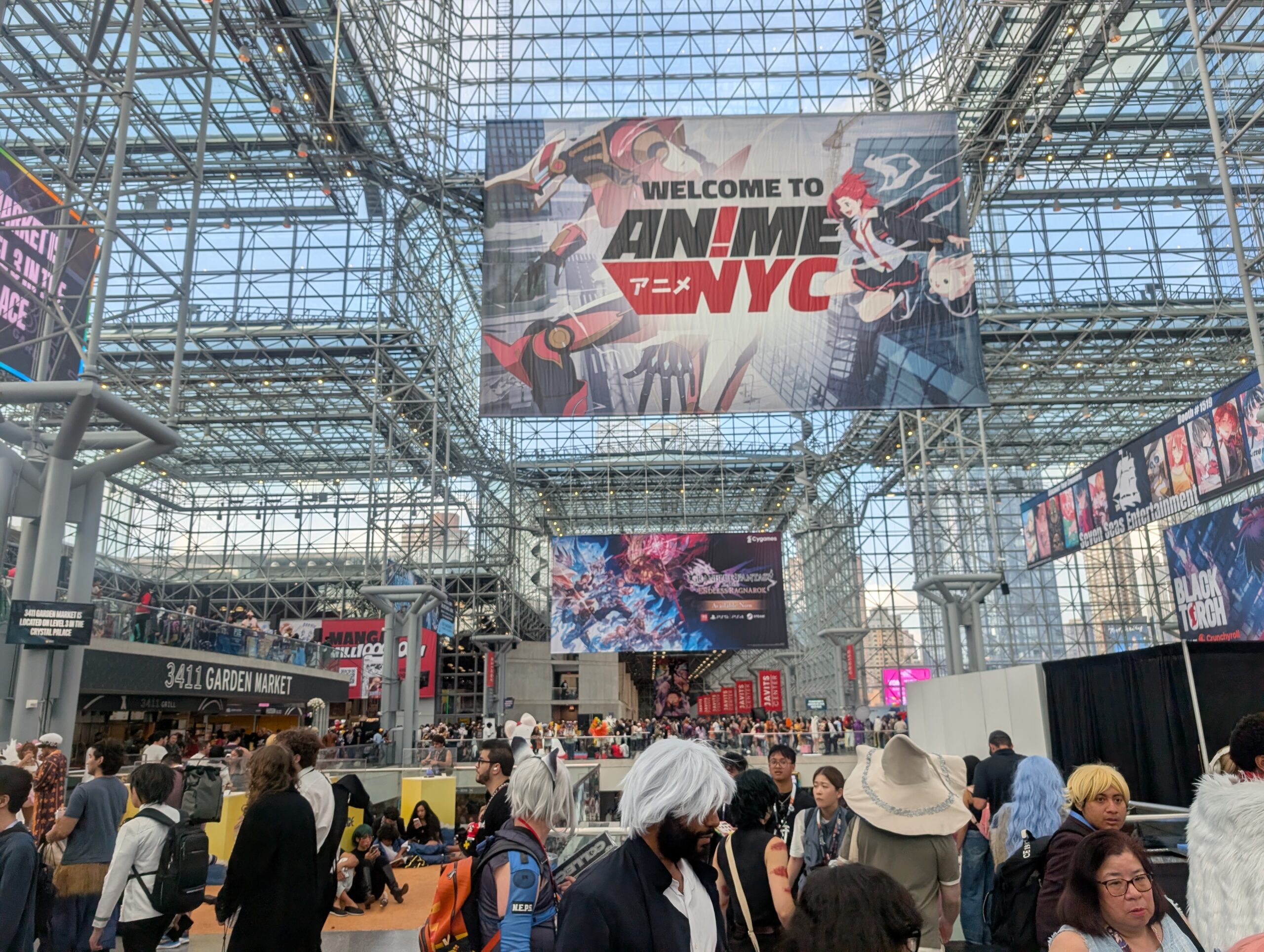
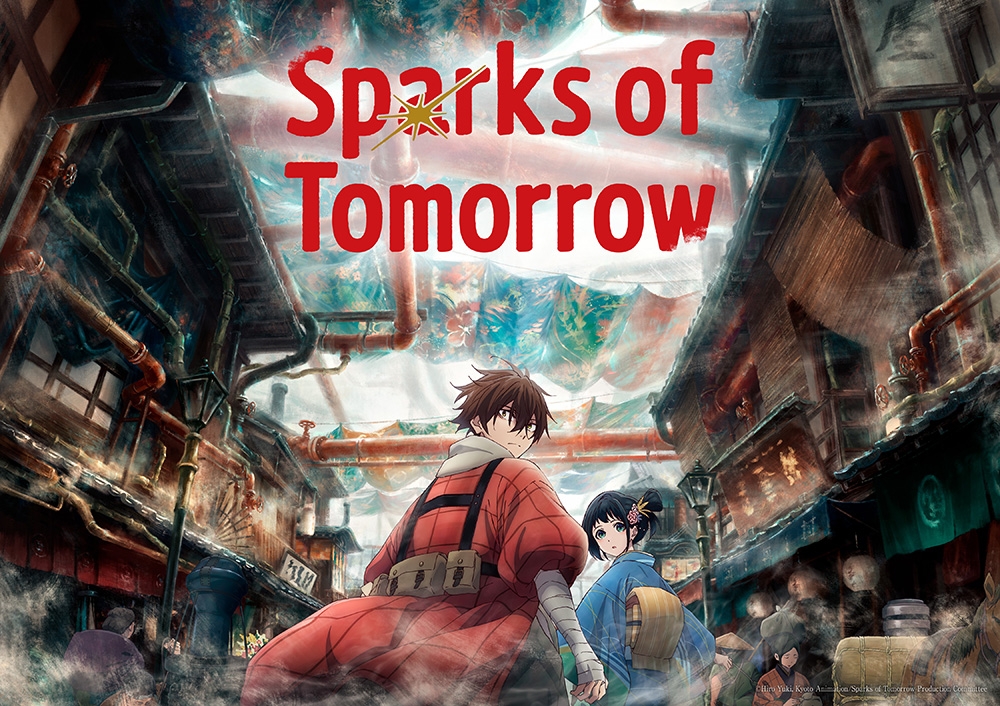
Sparks of Tomorrow art director Mao Takayama and Ginger Root (Cameron Lew), who sings the show’s ED theme, did a panel on the anime series, which is based on a novel by Hiro Yuki, at Anime NYC. Taking place in an alternate history early twentieth century Kyoto where the electric revolution never occurred, leaving the world in a steam-powered mode that covers the sky, the series follows Kihachi, a young inventor who aims to bring his late brother’s dreams of an electric future to life with the help of Inako, a deeply-religious teenage girl at a sake brewery. However, they are tracked down by Yosuke, an engineer and scion of a steam engine firm Inaki is in an arranged marriage with, who is trying to take Kichahi’s catalog of ideas he made with his brother that holds the key to the electric tomorrow.
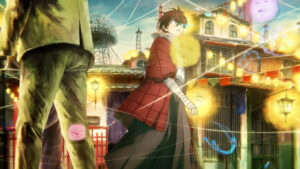
The panel opened with a live performance by Ginger Root of the ending theme, Soarin’, which the audience joined along in. Afterwards, Takayama and Ginger Root took the stage to discuss the series, along with producer Ryona Kuyama. (Kuyama noted that upon walking through New York City, steam was fittingly coming up from the ground.) As the art director was present, much of the discussion focused on the show’s visuals and animation. Sparks of Tomorrow utilizes a distinct visual style in which all of the backgrounds are done in an oil painting aesthetic, making it look like the characters are living in a work of art from the period in which the story takes place. Takayama also said that the animation director, Minoru Ota, told her to break the convention of steampunk shows typically being gray and dreary by making the colors more vibrant and complex, almost like someone was mixing paint.
In terms of the art direction, Takayama discussed how Ota did not want any “unnecessary falsehoods” in capturing Kyoto’s history (alternate or otherwise). There was a lot of effort put into the visual worldbuilding in the show, from the early Western influence present in the Meiji Era, to changes in the locations between seasons that I didn’t initially notice, but actually have significance, such as how the windows were opened and the furniture moved around when the show switched to Summer, showing how the characters were trying to increase air flow during the hot weather. For the scenes featuring different animation styles that populate the series, a lot of efforts were made at making the disparate styles fit together.

A lot of the discussion concerned the sixth episode of the series, which involves Inako starting an electric instrument girl band to perform during a festival to compete with Youske. The resulting climax shatters any and all expectations one has about a steampunk show set in the 1900s by having the girls put on an extended punk-metal performance with the electric instruments Kihachi helped create. Apparently, this scene in particular was meant to show how Kihachi’s inventions have helped the growth of the characters, and that punk rock was a good genre to show this because it “shouts from the soul”.
In regards to the ED theme, Lew said he created something that was “70% a Ginger Root song, and 30% an anime theme”, as simply doing a full song in his usual style was apparently not an option. In a press conference I attended, Lew also went further into the production of the song. (Apparently, as a huge anime fan, he thought the offer was too good to be true, and later bonded with Ota on their love of Lady Gaga.) He said that that Ota told him he wanted a song that would show the contrast between the world of the show and the future the premise promises. While the opening theme utilizes more Eastern, traditional instruments, the ending theme is substantially more electronic. Lew actually initially recorded the anime version of Soarin’ separately from the longer “full” version of the song and had to recreate the sound twice, and recorded the song to be easily editable as, this being a professional project, he expected multiple revisions. However, he ended up getting it approved on the first try.
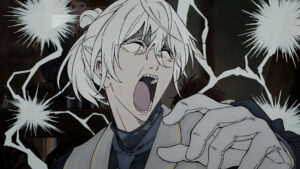
Sparks of Tomorrow is Takayama’s first series as art director, and I feel she did an incredible job. I very highly recommend you watch this show, because the art and animation work is some of my unexpectedly favorite of the year. It has a lot of fun giving the characters over-the-top facial expressions and engaging in scenes combining different animation styles, and the aforementioned painterly look is worth the watch alone. The panel ended with a quiz game where fans who paid the most attention to the series walked away with prizes, and the show’s then-unaired eighth episode was then shown in its entirety. Check it out if you can.