
This month has been a particularly busy one for me as a filmgoer. Not only is the New York Asian Film Festival taking place right now, but Japan Cuts, a two-week showcase of new Japanese cinema held by Japan Society in Manhattan, is taking place at the exact same time. Last year’s edition of NYAFF had a considerably larger animation presence than usual, with two new restorations and two premieres, which makes the lack of animated programming this year especially unfortunate (save for a screening of Yeoh Sang-ho’s 2016 film Seoul Station, as well as some animated shorts). Japan Cuts, on the other hand, presented North American or US premieres of three recent anime films, all of which I saw and was impressed by.

Things got off to an emotionally rough start with Cocoon: One Summer of Girlhood. Based on a manga by Machiko Kyō, and airing as a TV special to commemorate the end of World War II, the film is based on the tragic story of the Himeyuri students, a group of female students and teachers who were drafted into the war. The film follows two girls, Mayu and San, who live on an island and are recruited to the war effort along with their friends. Classes are cancelled and replaced with labor, before the girls are sent to a makeshift field hospital. It isn’t long, however, before the realities of war begin to sink in, and everyone realizes the situation may be more hopeless than they thought. Despite its hour-long length, the film takes its time, and for quite a while seems like an unassumingly light drama, which makes it all the more effective when the brutalities of war suddenly find their way into the picture. It doesn’t shy away from the horror of the subject matter, and really gets into how unquestioned nationalism and deference to authority, especially during wartime, can yield tragic results.
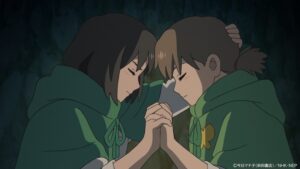
The real stunning thing about this movie is the animation. The film was made by alumni from Studio Ghibli, and it shows. The effort put into the film’s visuals is top-notch, and everything from the lush painted backdrops to the explosions are made with the level of care expected from the team. However, beautiful animation only goes so far. It’s the little details they put into the visual work, such as an air raid sequence where we never see the actual planes, just their shadows. There’s also violent stylized battle scenes that would make Alejandro Jodorowsky proud. It doesn’t reach the heights of Ghibli’s Grave of the Fireflies (if anything even can), but it’s still a really good war film all the same. Despite being inspired by WWII, the themes in Cocoon can really apply to any war, and sadly are as relevant as ever. It deserves to be seen and thankfully, more will soon, as GKIDS plans to release this theatrically in September.
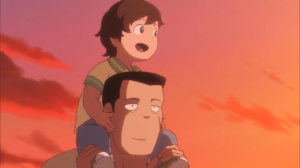
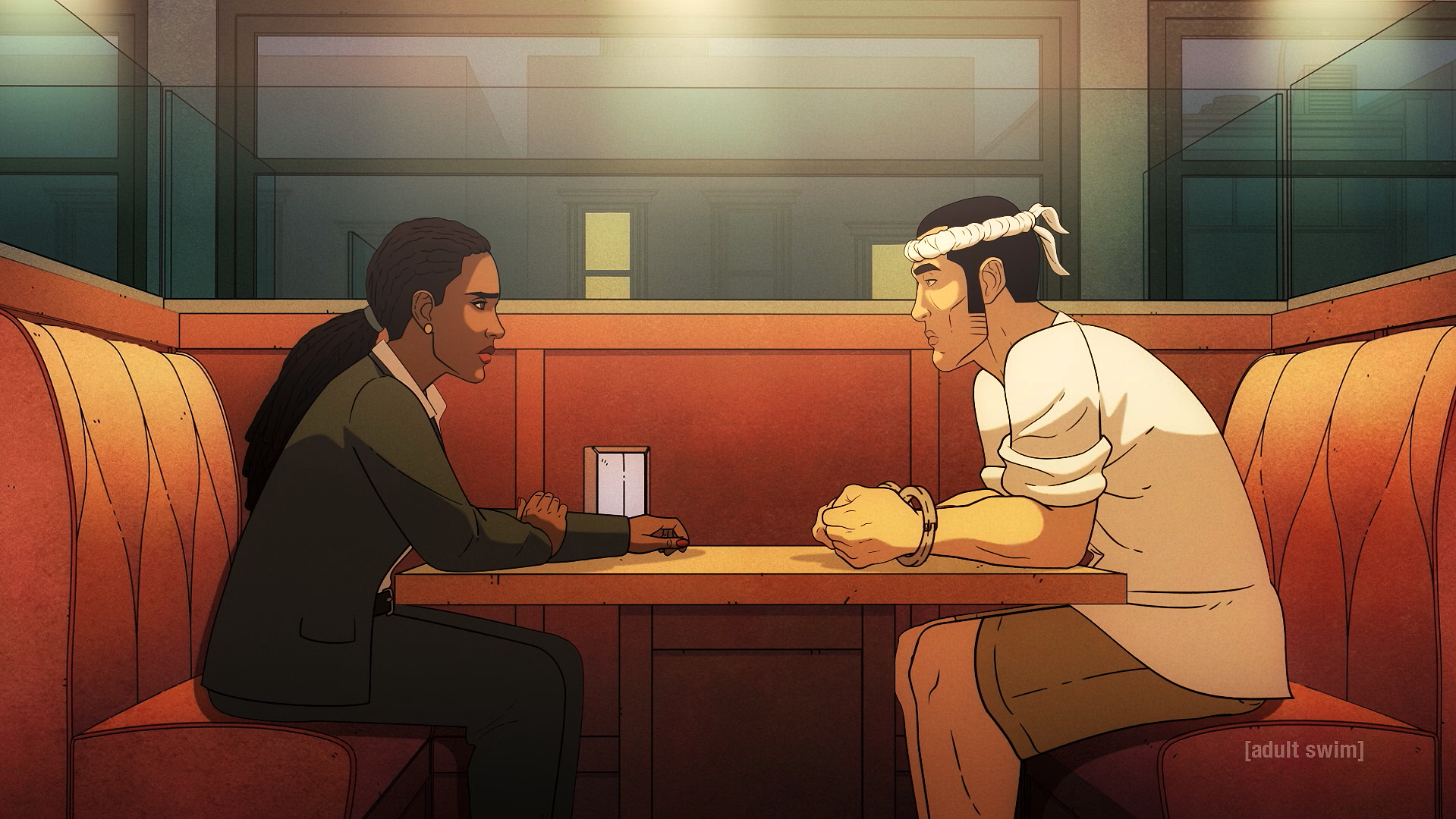
The Last Blossom, written by Odd Taxi creator Kazuya Konomoto, begins with Akutsu, a yazuka who is dying during a life sentence in prison. He looks back on how he got there, starting in 1987, when he takes in Nana and her infant son Kensuke. Despite Akutsu’s criminal profession, the two of them build a happy life together over years. However, when Nana receives a shattering diagnosis about Kensuke, Akutsu must make a drastic choice to save the boy’s life.
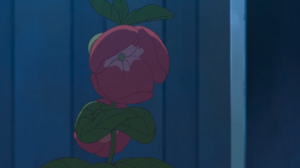
Mixing crime drama, romance, and slice of life, it’s a pretty grounded and beautiful story about the lengths we’ll go for those we love. Grounded, except for one little detail: there’s a talking plant. Voiced by Pierre Taki, a balsam flower starts talking to Akatsu in prison, and it steals the show. Rude, pessimistic, and charmingly animated, the flower makes for a great comic relief that elevates this from what could’ve been a pretty standard drama. I recommend it, as GKIDS is releasing this one in August.
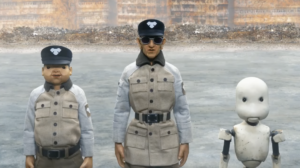
When people think of anime, they usually have a specific style in mind. However, anime is simply animation made in Japan, and animation as a medium has no specific style. For example, I’ve seen some brilliant works of Japanese experimental stop-motion. This year, Japan Cuts has thankfully decided to present a rare example of this in Takahide Hori’s Junk World, the follow up to 2017’s Junk Head. Having seen Junk Head, I was excited to see where Hori took the story next. Well, I have good news and bad news. The good news is, the film is, in my opinion, worth watching. The bad news is that it’s not a sequel to Junk Head, but a prequel. In fact, Junk World is a completely different movie than Junk Head in several ways.
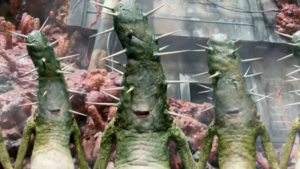
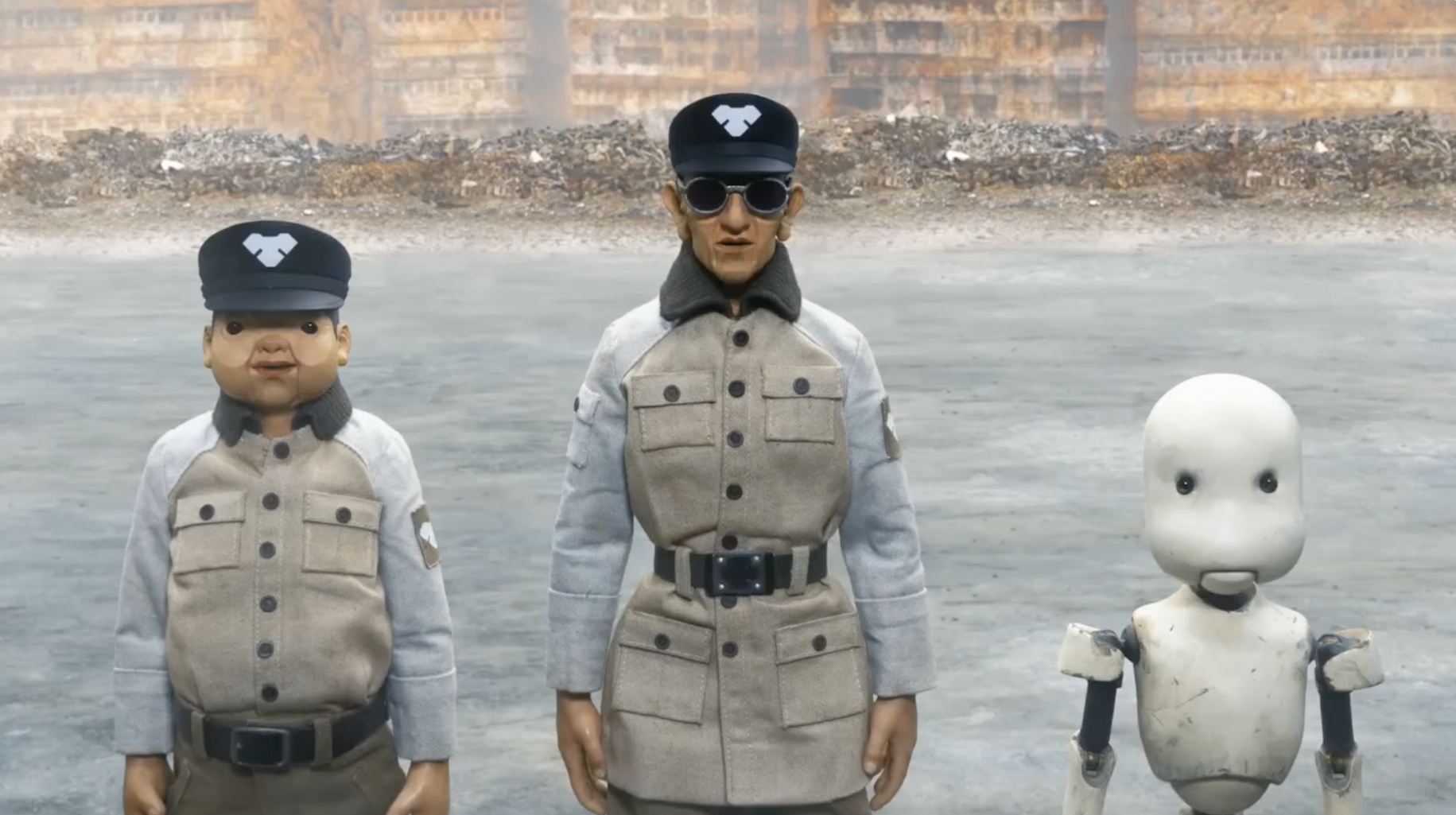
For those who don’t know, Junk Head took place in a far future where humanity has achieved longevity at the expense of fertility, while a species known as the Mulligans were artificially created for the purposes of labor but rebelled and now live underground. The film was a grungy fantasia of strange beasts, dirty backdrops, and often stunning sci-fi environments straight out of H.R. Giger. It was all even more stunning knowing that Hori completed the entire movie mostly by himself over seven years. Set over a millennium before Junk Head, Junk World expands upon the world and mythology created in the first film. During a ceasefire in the war between humans and Mulligans, a crew comprised of both species set out to investigate strange events in an underground city. The human Captain Torys, her robot Robin, and the Mulligan Dante soon find themselves being hunted down by a Mulligan religious cult known as the Gyura. However, the discovery of a strange space-time anomaly causes things to go in an even more mind-bending direction than anticipated.
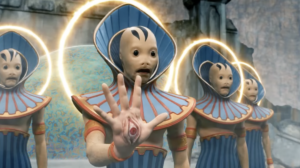
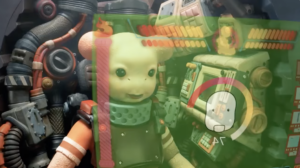
As mentioned, Junk World feels like a completely different movie than the first one, not the least because the director is working with an actual crew this time. Not just a crew, but a crew from noted studio Aniplex. However, this added production value works to both the film’s benefit and detriment. Whereas the first movie felt like the works of classic dark stop-motion animators such as the Brothers Quay, this movie heavily uses digital and greenscreen effects, while the stop motion work comes off more like someone playing with action figures. Think less Jan Svankmajer and more Robot Chicken. However, in attempting to recapture the first movie’s DIY aesthetic, Aniplex instead made a film that feels like a professional attempt to mimic said aesthetic, and the result feels somewhat inauthentic.
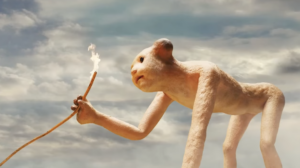
The Adult Swim vibe isn’t only present in the animation, however. Whereas much of the first movie relied heavily on the visuals and atmosphere, Junk World is almost entirely based around dialogue, and the humor has been significantly dialed up. This does create an issue with the movie, as the plot is simply too complicated and often nonsensical, and it sometimes threatens to wear thin. That shouldn’t be a reason to not watch it though. The creatures and world are just as imaginative and freaky as ever, and I loved how the film seemed to capture a specific aesthetic I associate with the mid-2000s. In fact, it heavily reminded me of when companies like ADV and Funimation would license niche Japanese curios like Vermilion Pleasure Night and Mr. Stain on Junk Alley, titles too out there for typical fans of anime and/or Japanese media. While I liked the first movie significantly more, this was still a very fun time, and I hope it does get a release soon.